Using The Value vs Effort Matrix To Make Upgrades/Changes
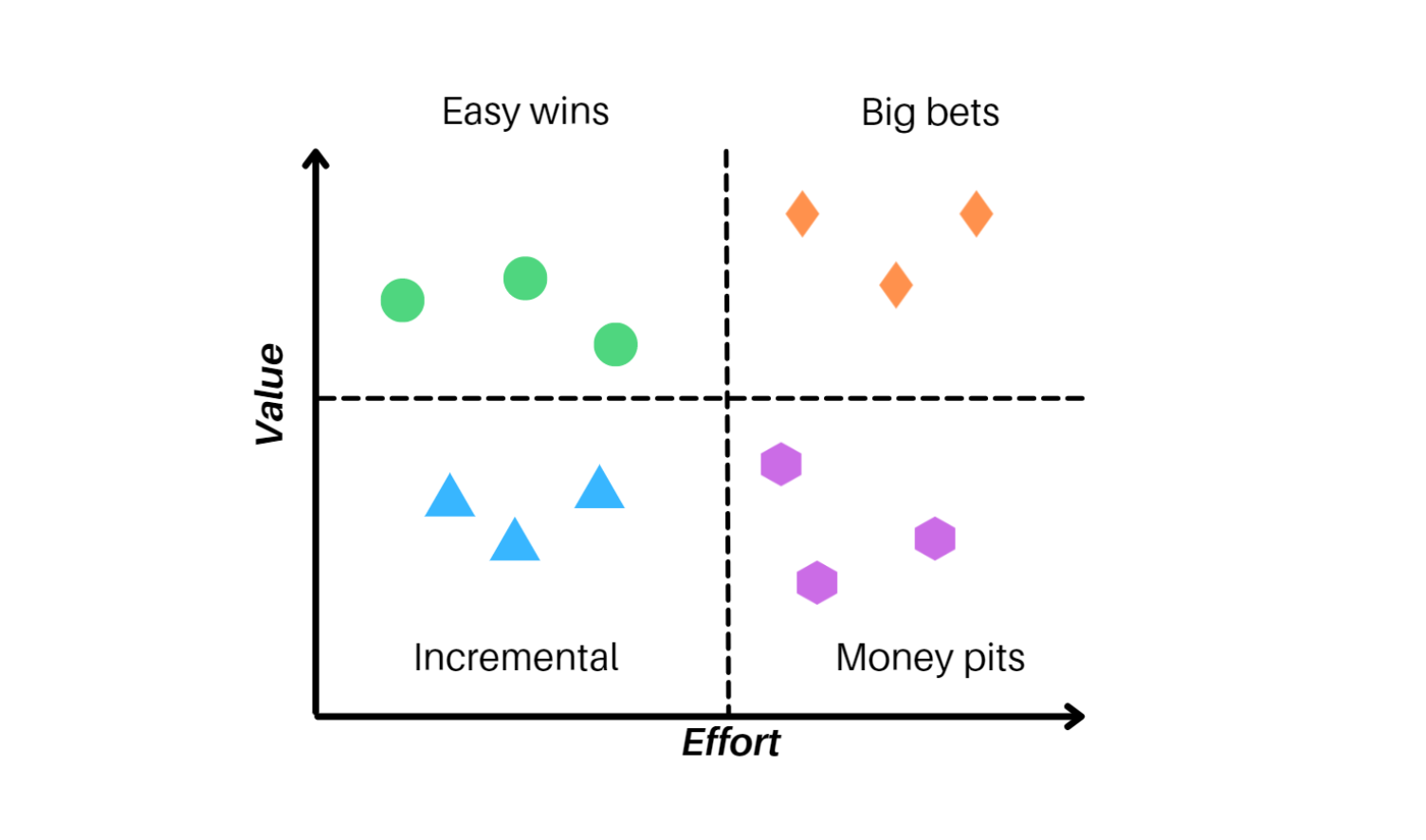
The Value vs. Effort Matrix, also known as the Impact vs. Effort Matrix, is a simple tool that helps prioritize tasks or projects by comparing the value (or impact) they can generate against the effort (or resources) required to complete them. It’s a common tool in business strategy, project management, and decision-making processes. The matrix typically has four quadrants and helps teams decide where to focus their time and resources.
Components of the Value vs. Effort Matrix:
1. Value (or Impact):
• This axis (usually the vertical axis) measures the potential benefit, impact, or value that completing a task will bring to the organization or project. High-value tasks bring significant benefits, while low-value tasks bring minimal returns.
2. Effort:
• This axis (usually the horizontal axis) measures the time, cost, or resources required to complete the task. High-effort tasks require more resources (time, manpower, money), while low-effort tasks are easier or faster to complete.
The Four Quadrants of the Matrix:
1. High Value, Low Effort (Quick/ Easy Wins):
• Focus Area: These are the best tasks to prioritize because they offer significant value while requiring minimal effort.
• Action: These tasks should be completed as soon as possible.
• Examples: Simple optimizations, small process improvements, or quick updates that have a large impact on efficiency or profitability.
2. High Value, High Effort (Major Projects / Big Bets):
• Focus Area: These are important tasks or projects that can bring substantial value but will require a significant amount of time, resources, or investment to complete.
• Action: Plan these projects carefully, ensuring you have the necessary resources, as the high value makes them worth the investment.
• Examples: Large-scale projects, product launches, new system implementations.
3. Low Value, Low Effort (Fill-ins or Nice-to-haves):
• Focus Area: These are tasks that don’t bring much value but are relatively easy to complete.
• Action: These tasks can be done when there’s extra time, but they shouldn’t be a priority.
• Examples: Administrative tasks, minor improvements, low-impact activities.
4. Low Value, High Effort (Time Wasters/Money Pits):
• Focus Area: These tasks require a lot of resources but deliver very little value in return.
• Action: Avoid or deprioritize these tasks as much as possible. If they’re necessary, try to delegate or automate them.
• Examples: Overly complicated processes, tasks with minimal business impact, unnecessary meetings.
How to Use the Value vs. Effort Matrix:
1. List Your Tasks or Projects: Start by identifying all the tasks or projects you need to evaluate.
2. Evaluate the Value and Effort: For each task, estimate the potential value (impact on goals) and the effort required (time, money, resources).
3. Plot Tasks on the Matrix: Place each task in the appropriate quadrant of the matrix based on its value and effort.
4. Prioritize: Focus on completing tasks in the “Quick Wins” quadrant first, and develop a strategy for tackling the “Major Projects” later. Avoid spending too much time on “Time Wasters” and consider scheduling “Fill-ins” when time allows.